EDITORIAL
Cheap electricity is the driving force behind the investment wave
Finland is on the cusp of a new era of economic growth, with 18 years of economic stagnation finally behind us. The Confederation of Finnish Industries is currently monitoring over 300 billion euros in green transition investment plans. When the accelerating data center boom is added to this jackpot, our country has a historic opportunity to create record economic prosperity and turn the trade balance into a strongly export-led one.
The biggest attraction of this unprecedented wave of investment is Finland's ability to produce cheap and clean electricity. Foreign investors have woken up to this competitive advantage, but the situation also offers exceptional economic opportunities for domestic players.
In the short term, the construction of data centers will also accelerate investments in electricity production and accelerate other electricity consumption projects. In the long term, the growth in electricity production will create the basis for the hydrogen economy and, above all, for the renewal of the chemical industry, which can guarantee Finland a long-term and stable source of income in the global market. Already, a huge demand is emerging in Central Europe for, among other things, e-methane and e-SAF.
Alongside huge multi-million projects, the investment wave is opening up significant growth and earning opportunities for Finnish SMEs, which can offer their services and expertise as subcontractors. There is plenty of capital available in the financial markets and a wide range of different financial instruments, so companies should be active now and boldly apply for financing for their growth. Due to the uncertainties in the global economy, the financial base must be built to be sustainable so that the upcoming boom can withstand potential market disruptions.
The coming year will bring a clear peak in the implementation of green investments. The state's task is to ensure that there is enough affordable electricity and transmission infrastructure for everyone in the future. In order to fully utilize the economic potential of all of Finland, the construction of wind power should also be allowed in eastern Finland. This would distribute the conditions for growth equally throughout the country. The development of the hydrogen economy in all of Finland largely depends on how the eastern wind can be utilized and thus also promote the profitability of investments in western Finland.
Autumn has brought a lot more optimism not only for the development of the national economy but also for the hydrogen economy. We live in interesting times!
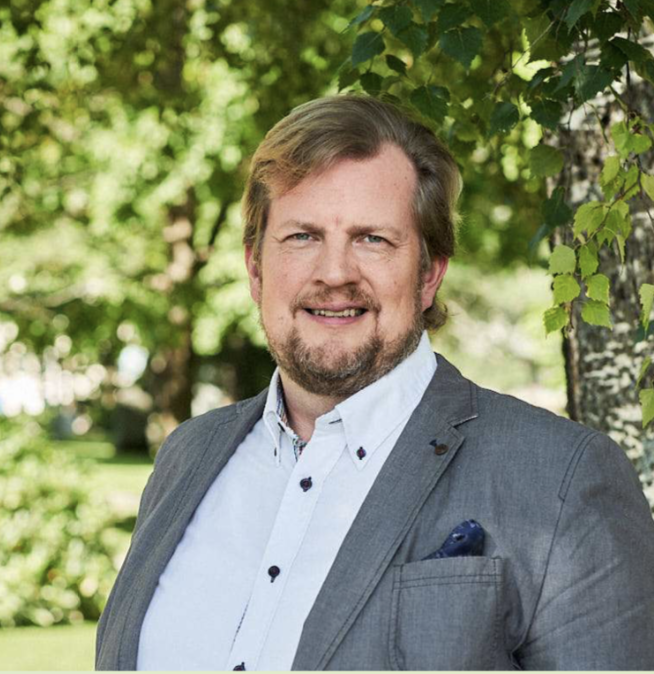
Jami Holtari, Managing Director, Finnish Hydrogen Valley Association

Finland's economic growth stems from global problems
Finland is at a historical turning point, where climate change, technological leaps and a changed geopolitical environment are forcing us to look at the economy, industry and social structures from a completely new perspective. According to Mikko Spolander, Director General of the Ministry of Finance, global changes create opportunities for Finland.
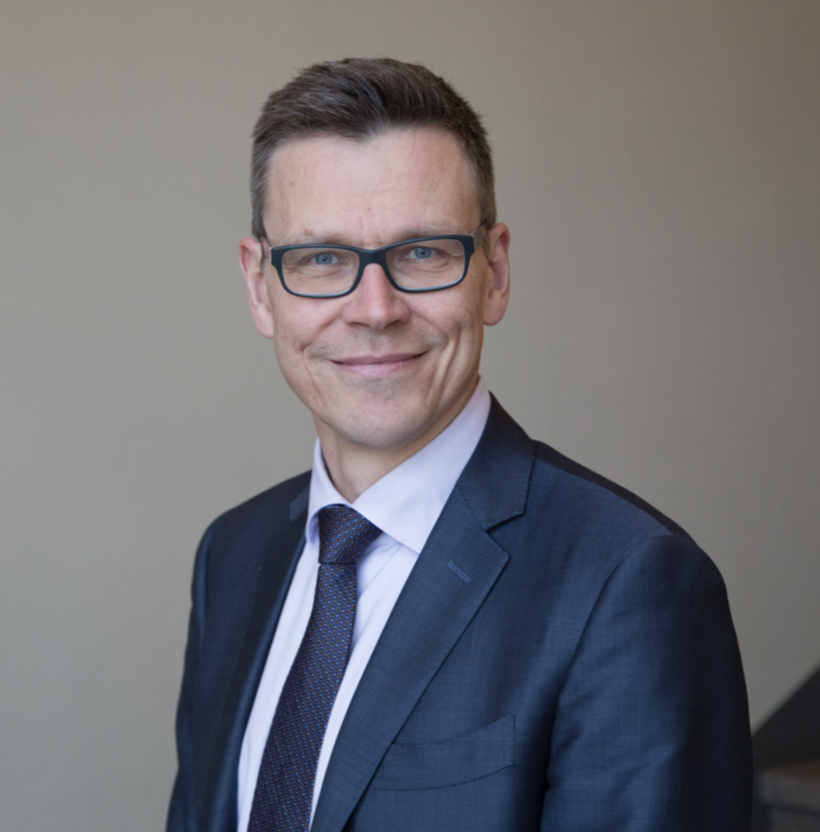
Mikko Spolander, Director General of the Ministry of Finance, emphasizes that Finland's future employment, value added and the prerequisites for well-being must be sought in areas where the world has enormous unsolved needs and questions. When Finland is able to offer competitive, technology-driven answers to these questions, the gates to new success will open.
Google's mega-investment is a testament to Finland's attractiveness. Spolander describes the news as "extremely good" for many reasons, one of which is the exceptional scale of the project.
– This is the largest single entity in Finnish industrial history. What makes it even more significant is that the project is being implemented at a very fast pace – in about two years – and it is not a ten-year program, says Spolander.
Another key reason is related to the so-called “chicken-and-egg problem” between electricity demand and supply. The Google agreement seeks to solve this by linking electricity demand and increasing its supply through a 22-year power purchase agreement.
Thirdly, Spolander highlights Finland as an investment environment: global, international giants operating at the forefront of technological transformation trust Finland as a safe and favorable investment environment.
A broad and comprehensive growth strategy is needed
Data center projects have sparked public debate about what kind of investments are desired in Finland and the need for a strategy to achieve growth. At least when it comes to the green transition, Finland lacks a unified industrial strategy. Green transition projects are popping up like mushrooms in an autumn forest without a comprehensive picture of the geographical location of electricity production, storage and consumption.
Spolander welcomes the idea of creating a broader vision for the future for Finland, including a more strategic approach to business and industrial policy. The vision should reflect what Finland wants to achieve from this transformation. However, this requires much more than just planning energy infrastructure; it requires coordinating factors that build the competitiveness of society, such as skills and education, transport and information infrastructure, labor markets, planning, licensing, business regulation and subsidies, financing and taxation.
– The challenge is that there are a huge number of different elements to coordinate, but the good thing is that we decide on many of these things ourselves; they are in our own hands, Spolander reminds us.
He would like to see election campaigns and political decision-making rise above everyday issues and gain the ability to perceive larger strategic perspectives.
– Since education, taxation, regulation and market control always involve value charges, they are at the core of policy-making. Here, a fair reconciliation of different values and views through open discussion is vital.
Existential needs require state-led guidance
In today's world, the economy is increasingly also about geopolitics and security policy, which has sparked a debate about the role of the state in the economy and in determining the direction of the economy. Spolander fundamentally believes in market-based solutions and the efficient allocation of resources in the market instead of company- and industry-specific partial optimization or state-led control.
However, the world situation has changed, and new, existential needs have come to the table – such as national security. According to Spolander, conscious choices can be made by trusting in market efficiency in certain sectors, but accepting that resources are not allocated in the most optimal way in the name of pure economic efficiency when it comes to existential needs.
– We may be left a little poorer in the long run for this reason, but we will ensure that our existence is secured and our security is assured.
Economic efficiency and security can also be combined. A good example of this is the growth in defense spending. When exceptionally large amounts of money are invested in defense, it must not be just about equipment and personnel costs, but the investments must be closely linked to the engine of new technology, research and product development. Like the United States, defense investments must be able to build dual-use solutions that utilize new disruptive technologies and also create civilian capabilities, for example in artificial intelligence, quantum computing, radio and space technology, and decoupling from fossil energy.
A chance for talent to flourish
If Spolander were to sketch out his own vision of what Finland should rely on, the answer is clear: education and skills.
– Accurate prioritization and targeting of public funds to the most impactful targets. Favoring market-friendly solutions. High-quality education and strong investment in research, product development and innovation capabilities. Fair competition and functioning markets that screen winners and scale them effectively to the world. A light and agile regulatory and administrative environment that allows people space to experiment, create and try, Spolander outlines.
– I have a slogan: “Let’s free up space for talent to flourish.” We need to create such potential and an operating environment for people that they feel that the best option for themselves is to live and try here in Finland instead of going to Silicon Valley or Switzerland, even if they could, he summarizes.
Spolander's vision for 2040 is an ambitious, high-tech country based on high productivity and intangible value added, where people are well-positioned to build their own rewarding lives. In this vision of the future, growth stems from clean transition, expertise and bold solutions.
ResilEast is a textbook example
Regarding the challenges of Eastern Finland and the special economic zone debate, Spolander admits that the eastern border imposes its own unique boundary conditions and constraints on the region. He is somewhat sceptical about separate special economic zone concepts, and emphasises the principle that regions must find their own strengths and use them to find solutions to the needs and problems of others.
– For example, South Kymenlaakso with Kotka-Haminoin is a great example of how long-term work and ready-made investment packages can attract international players to invest in the region, says Spolander.
The ResilEast program solves the problem of coordinating wind power construction and the defense forces' radar environments, and, for example, utilizes wind turbine structures as part of underground shelters.
– Sounds like a textbook example! The constraints imposed force you to be creative. When the road is blocked, you have to come up with something else. This is exactly the recipe: accurately identifying the problem and finding ways to turn the problem into an attractive solution.
Geopolitical change, climate change and the green transition are the megatrends driving the ResilEast program. Spolander sees climate change not only as a major threat, but also as a huge incentive to find sustainable, more material-efficient and energy-efficient solutions. Technology is key to decoupling living standards from heavy material consumption.
– A transition is always a situation where the market is redistributed. Now we need to be awake and involved, Spolander summarizes.

OP's Niina Viljakainen: Cash flow determines the bank's financing decision
At the heart of corporate financing are not collateral or industry growth prospects, but the ability of the business to generate positive and predictable cash flow. When applying for financing, it is worth starting sparring with the bank early. Business growth is in the mutual interest of the entrepreneur and the bank.
The financing application explains where the current and future cash flow comes from, how the profit is formed, what financing is needed for, and how the financing will affect the company's finances as a whole. The company's repayment capacity is a critical factor, as the loan typically begins to mature immediately after the drawdown.
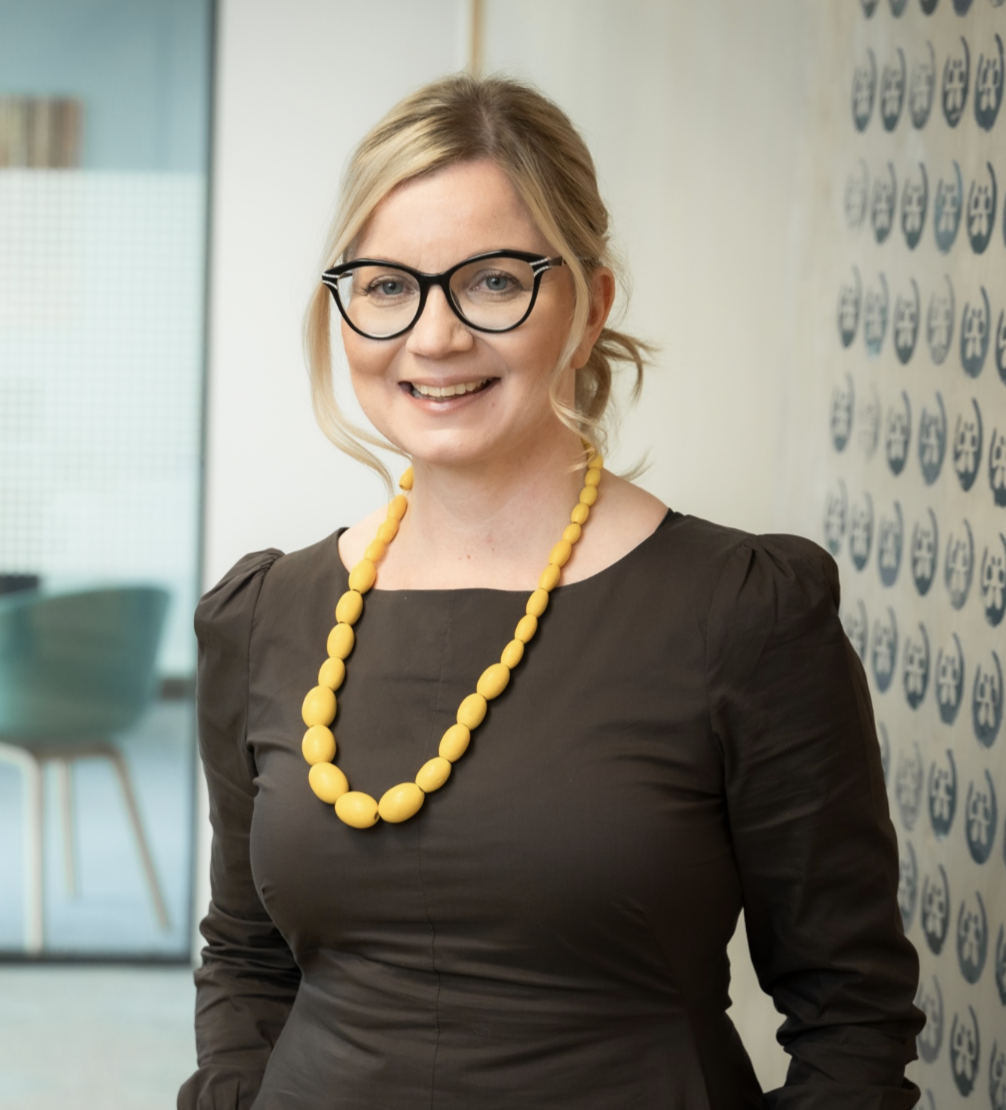
“Positive and predictable cash flow is the most important basis for financing,” summarizes Niina Viljakainen, Customer Account Manager at OP Southeast Finland.
Risk management looks at the big picture: what happens if plans don't work out or the market changes. Perfect metrics aren't required, but realistic preparation for uncertainty is essential.
The company's history, on the other hand, tells how past plans have been realized. However, in growth and investment financing, a realistic plan for the future is more important than history.
Green transition projects are interesting
According to Viljakainen, from the financier's perspective, the hydrogen economy does not have a special position compared to projects in other sectors. Green transition projects are interesting, but the decisive factor is the feasibility of the business and the impact on the vitality of the region.
The bank's assessment utilizes the customer's own data and insight, as well as the entire OP Pohjola and OP Kaakkois-Suomi expert network. Larger projects typically involve more people. However, the customer's expertise is a key starting point: the financier trusts that the entrepreneur knows his or her own business.
Spar with the bank in time
A common mistake is to contact the bank only after investment decisions have already been made. Viljakainen recommends discussing the matter with your contact person even when the investment is just an idea. This way, financing can be built together and both parties' assumptions remain in line.
– The bank acts as a sparring partner, sitting on the same side of the table as the entrepreneur. The aim is to find feasible solutions and support the company's growth already in the early stages of the project – before the plans become blocked.
The goal is to finance good projects, help the company survive, pay off its loans, grow and succeed.
“The company's success also supports the bank's business,” Viljakainen summarizes.
Entrepreneurs are therefore encouraged to take an interest in their own figures outside of the bank. Good calculations and plans are not just documents for a financing application – they help the entrepreneur themselves understand cash flows.
For a start-up company that does not yet have cash flow, the discussion begins with a business idea, planned business operations, and the entrepreneur's commitment. At a minimum, a budget plan and cash flow statement are needed, as well as an understanding of how a business starts.
– It is worth utilizing external sparring: in Southeast Finland, Imatra Region Development Company Kehy, Cursor in the Kotka area or another local partner, accounting firm and experienced accountant can help, Viljakainen advises.
Cash flow first, collateral second
Collateral acts as security, not as the basis for financing. The better the solvency, cash flow and profitability, the lower the collateral requirement usually is. The bank does not finance a project solely against collateral.
Financing typically consists of the entrepreneur's own contribution, a bank loan, Finnvera and potential investors. In smaller companies, this trio is common. If it takes, for example, six months to start sales, the assessment will examine the entrepreneur's own investment, other financiers and the certainty of future income. Signed contracts make it easier, but preparation for delays must still be demonstrated.
– Funding is granted for projects worth a few thousand euros to projects worth millions. The most common reasons for rejection are a lack of positive cash flow or an unrealistic plan – especially a situation where the entire financing is based solely on a bank loan without the participation of the entrepreneur or other financiers, Viljakainen says.

Hydrogen projects need realism and long-term purchase agreements
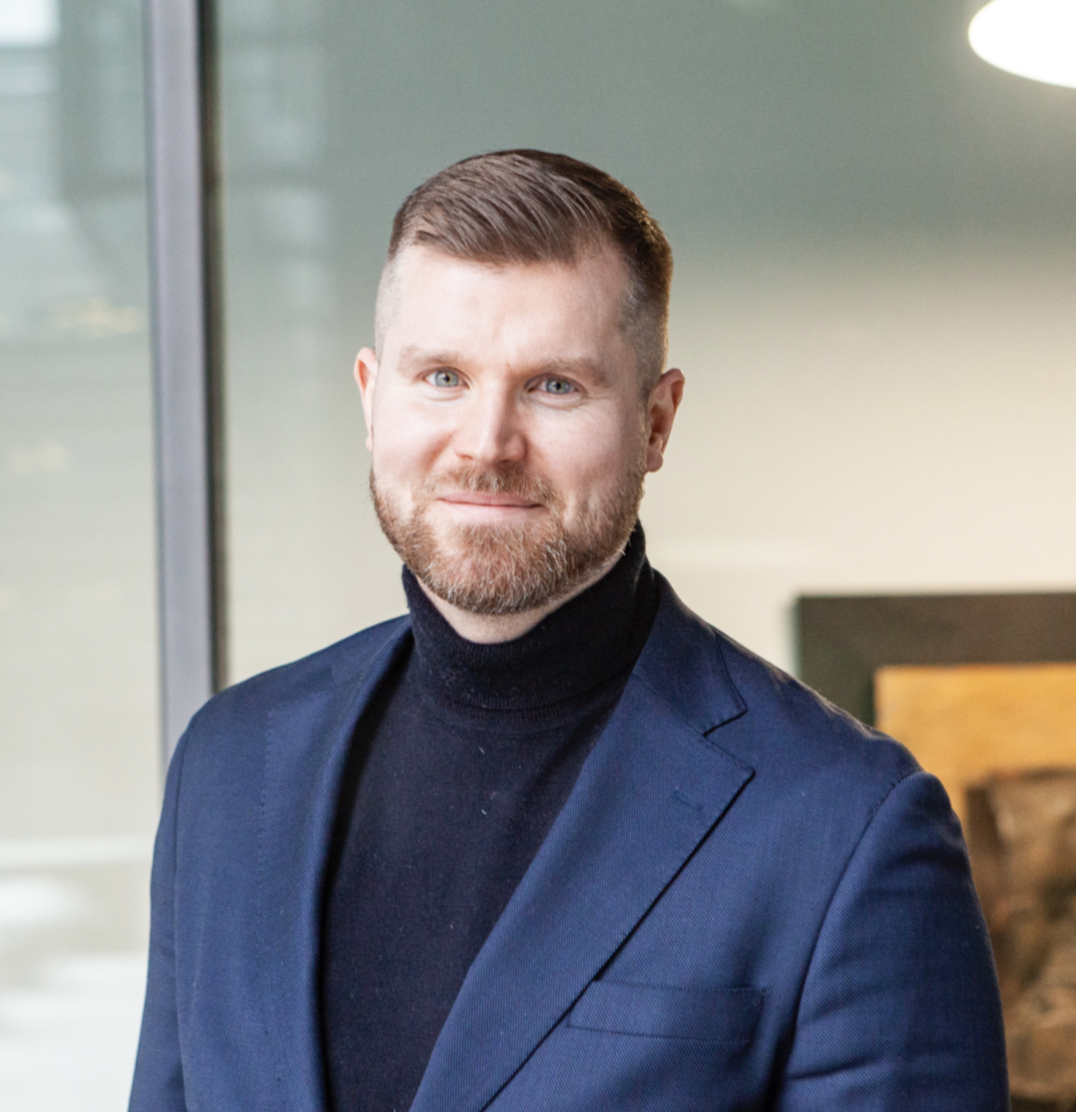
Tesi invests in hydrogen projects after the feasibility study phase, from project development to construction. According to Esa Koponen, Investment Director for Green Transition Plant and Technology Investments, the hydrogen economy has moved from boom to realism. Investors come in after the feasibility study and expect a clear return.
Finnish Industry Investment Ltd, Tesi, is a state-owned private equity firm that invests on market terms in private equity funds and directly in startups and scalable industrial companies. Tesi operates as an active minority investor, meaning it does not finance projects alone, but always requires a private lead investor or a larger consortium.
Typical partners of Tesi in industrial investments include large infrastructure funds, domestic institutions or strategic actors such as partnerships based on long-term purchase agreements (offtake) or technology companies.
– Investments are made both in project developers and platforms that develop multiple production plants, as well as in individual projects and technology companies that build a first-of-a-kind commercial production plant, says Investment Director Esa Koponen, describing Tesi's strategy.
The size of the investments varies. In project development, we are talking about a few million, while in the construction phase it can be in the tens of millions. In the initial phase, when there is no cash flow, investments are focused on plant design, permitting and building a customer portfolio.
Once the plant is complete and offtake agreements generate cash flow, the return will shift to more stable contract-based business. In the early stages, projects involve significant binary risks, such as zoning and permitting progress. Finding venture financing at these stages is challenging, and Tesi specifically acts as an active minority investor together with private actors.
Realism replaces boom
The hydrogen boom of 2020–2024 was associated with a zero-interest rate environment and the transition of green to a financial bubble. Now realism has entered the market. There are many projects in Europe that lack an adequate electricity grid, carbon dioxide or other basic conditions critical to the operation of the project. According to EK, the value of the different phases of hydrogen projects is over 40 billion, but far from all of them will be implemented on schedule – if at all. Schedules are being shifted, and investors are evaluating projects more critically than before.
According to Koponen, the investment market is currently moving more strongly in data centers and battery storage. There is still little local demand for green hydrogen in Finland, hydrogen is used in the refinery industry, and solutions for the steel industry are further in the future.
– The situation is clearer for e-fuels. E-methane, or synthetic natural gas, looks the most promising: Germany's road traffic emission reduction regulation and similar decisions in Spain are creating demand that can be supplied using the existing gas pipeline network. Aviation fuels are still of interest, while the methanol side has been stalled due to international maritime regulatory developments. Tesi is involved in developing hydrogen-related projects, including the development of e-methane plants and aviation fuel projects. Examples of this include investments in Nordic Ren-Gas and Norsk e-Fuel.
Financing is typically only arranged when customer demand and offtake agreements are in place. The first payers are found in the segments that are directly affected by emission reduction obligations and fines – especially road transport. Recent long-term offtake agreements are an important message: they show that there is a willingness to pay, especially in the German market.
Provide the investor with as much information as possible
Typically, an investment round is relevant after the preliminary study, when the project development round begins to collect funds. Technology companies often talk about an A-round, the size of which starts at around ten million.
– Useful material in advance includes a clear schedule, development and investment costs, the offered return, and a view of potential partners. This information helps the investor assess the project's readiness and risk level, Koponen advises.
During the project development phase, the company usually has little or no debt. Possible Business Finland-type subsidies or investment subsidies are available to the entrepreneur, but financing is handled on equity terms. During the construction phase, EU funding, direct investment subsidies and direct bank loans from several banks may be included.
According to Koponen, the distribution of financing can be 50–50 in one direction or the other, but the hydrogen economy is still at such an early stage that equity capital is needed in proportion to what is needed in mature industries.
– Banks require cash flow in return for a loan, and equity investors require an adequate return for the risk they bear. The immaturity of the market means that bank financing alone is not enough to move projects forward – equity financing will carry a significant part of the risk for a long time to come.
Risk sharing opens up the value chain
Bio-derived carbon dioxide from the forest industry, together with hydrogen, opens the door to the chemical industry. The potential is great, but the projects must be large enough and enable export. When several parties want to buy the same carbon dioxide – that is why clear risk-sharing models with companies are needed. Forest industry companies are in different situations, and their attitudes towards new value chains vary.
– In the new value chain, all parties – suppliers, customers and banks – are trying to protect their own risks. If every risk is tried to be transferred away, the project will not progress. Joint financing and a willingness to share risk are needed. The supply of carbon dioxide will not progress without a sufficiently strong commercial basis, as operators do not have a compelling need to offer bio-based carbon dioxide to the market, Koponen analyses the situation.
The idea of a government guaranteed price for bio-based carbon dioxide is a subject of debate. There are various models in Europe where the public sector acts as a kind of guarantor between producers and buyers. For carbon dioxide alone, the model is not necessarily simple, but similar structures are already being sought for hydrogen-related solutions, for example in Germany.
New insights into energy security and self-sufficiency
The growth of the Finnish economy is reflected in investment news in data centers, battery storage facilities and the growth in the size of projects. Startup funding rounds have been doing well, and there have also been listings. Interest rates have been under upward pressure, but the market has not stopped. The green transition has not disappeared – it has gained new angles in terms of resilience, energy security and self-sufficiency.
Regulation is progressing slowly but surely, according to Koponen, customer demand is starting to emerge in Europe, and the first operational plants in Finland would be an important signal for the entire ecosystem.
– The Finnish investor community is understandably cautious in the face of a new market – that is why both evidence and courage are needed to share risk within the value chain. Tesi aims to contribute to the development through investment research, statistics and participation in the first projects.

MEMBERS INTRODUCED
Forest assets have a new role in the energy transition
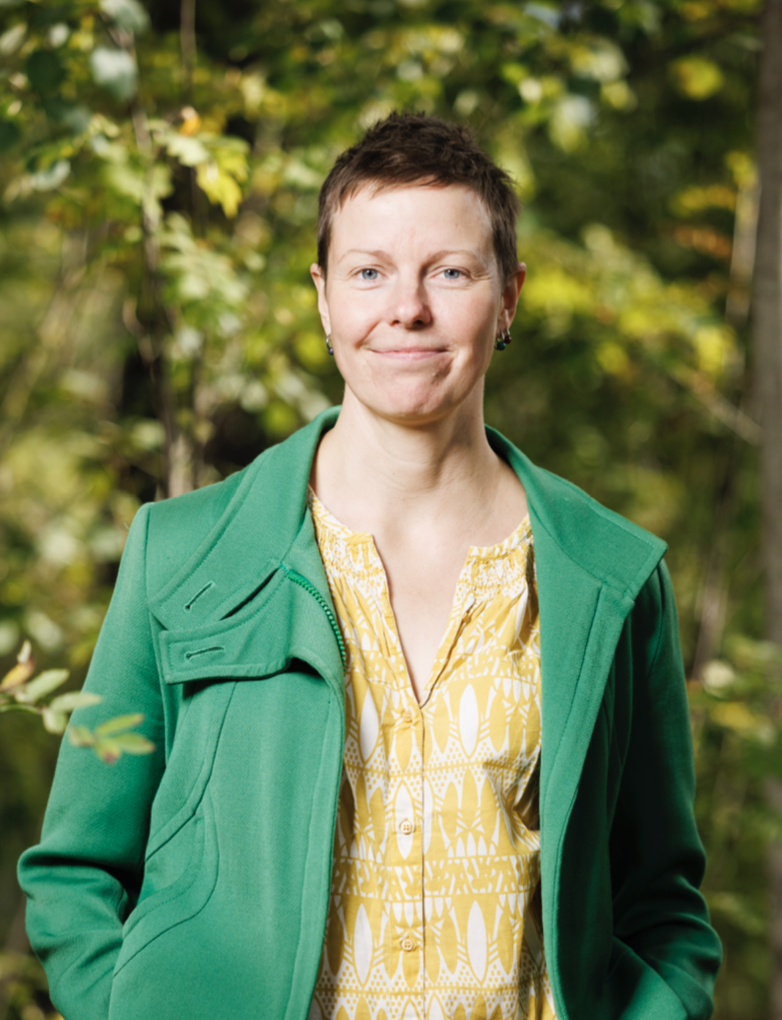
The green transition is changing Finnish society, business and land use at an unprecedented pace. Although Tornator's core business is strongly based on sustainable forestry and forest management, the company has long been committed to the diverse utilization of its land.
Tornator specializes in forestry and owns forests in Finland, Estonia and Romania. The group's turnover in 2025 was approximately 232 million euros. The company has a solid history in managing Finnish forest assets.
The core of Tornator's strategy in the current operating environment is the new opportunities offered by the soil for renewable energy.
– Forests are no longer just areas for wood production, but they form a key foundation for Finland's future clean energy production and industrial investments, emphasizes Paula Mäki, Wind Power Manager at Tornator.
Strategic cooperation with Fortum launched
The cooperation between Tornator and Fortum also signals the versatile utilization of the land. It is a question of an exceptionally large investment from both parties: the cooperation concerns an estimated power potential of approximately 1,000 megawatts in the eastern Finland region.
The cooperation between Fortum and Tornator brings to the discussions with the authorities an operator with genuine potential to promote the development of wind power in Eastern Finland and at the same time secure the growing energy needs of the whole of Finland. Tornator is the largest private landowner in the region and is therefore a key partner in the development of wind power in Eastern Finland.
– The project includes the realities of eastern Finland, i.e. challenges related to security and regional control, which have slowed down the construction of wind power in the area. You always have to start somewhere, says Mäki.
Through the initiated cooperation, it will be possible to create a better picture of the real opportunities in the region and find solutions for how to advance wind power projects in the region.
Current information from a rapidly developing field
Tornator's decision to join the Finnish Hydrogen Valley was born from the need to stay up to date and receive current information from a dynamically developing field.
– The main reason for our membership was the desire to get a comprehensive overview of what is happening in and around the hydrogen economy, especially from the perspective of Eastern Finland. Since the majority of Tornator's holdings and countries have a strong foothold in Eastern Finland, the region's future issues, investments and regional development are vital to the company, says Mäki.
Tornator has identified that Eastern Finland has great growth potential for energy transition and renewable energy. The company does not want to follow developments from the sidelines, but wants to be actively involved in building a situation where a strong and vibrant hydrogen cluster is created in Eastern Finland.
– Discussions with other actors have shown that cooperation achieves more than going it alone, Mäki explains.
At the core of membership is communication.
Mäki emphasizes the importance of information dissemination as part of the added value of Hydrogen Valley membership. Although, for example, Finnish Hydrogen Valley webinars have been valuable tools for monitoring the development of the hydrogen economy, the amount of information and the need for information is enormous.
Mäki himself works extensively with wind power, and monitoring hydrogen projects in the midst of everyday life requires effective tools.
– This need is perfectly met by Hydrogen Valley's new service, the Hydrogen Week media summary, which is distributed on Mondays. The media summary brings together the hydrogen economy news that has been featured in the media during the past week, which allows members an easy way to stay up to date with just a few glances, Mäki says with gratitude.
According to him, the new service is very welcome, as it helps to understand the whole picture without having to hunt for each piece of news separately amidst other busy work.
Networking is another key pillar that Mäki finds useful in being a member of. The Finnish Hydrogen Valley brings together a large number of actors from different backgrounds, which enables the exchange of information and the discovery of new perspectives. Tornator's role as a large landowner is central to this network.
– When a company is actively involved in communities, it is known as a reliable and approachable partner. This lowers the threshold in both directions: it is easier for project developers and other actors to approach Tornatori, and there is no need to make every effort from scratch, says Mäki.
Alliance for Forestry and Green Transition
Tornator's operations are a prime example of how traditional forestry and a modern green transition can coexist and support each other. While forestry is the core of the company, the versatile utilization of the land in renewable energy production brings significant added value to the business.
Tornator has been working on this issue for over a decade.
and the results of the work are visible: there are currently 57 operating wind turbines on lands owned by Tornator.
– Our own climate program sets the bar even higher, as the goal is to increase the number of power plants to one hundred by the end of 2030, says Mäki.
The energy potential of the Eastern Finland region is of interest. According to Mäki, the growth potential of wind power is great, and the suitability of the land is being continuously researched and developed.
– There is a lot happening in the battery sector at the moment; there are currently eleven battery storage projects in Tornator's countries that have received investment decisions, two of which are already in the construction phase.
Data centers are also an interesting land use opportunity for Tornator. Although data centers do not directly produce renewable energy, they are significant consumption projects that come with renewable energy and contribute to the need for clean energy in the future. We are working with several companies, and research collaboration is progressing in parallel with the development of the test platform.
NEWS FROM THE WORLD
The utilization of wind turbines in the ResilEast program became the number one news in the media
In the future, wind turbines can serve not only as clean energy production facilities but also as platforms for a sensor network that strengthens Finland's security. LUT University research has found that sensors supporting air surveillance can be placed in wind turbines without interference from the turbines becoming an obstacle to their operation. The research supports the goal of the Finnish Hydrogen Valley ResilEast program to combine green transition, regional vitality and security of supply.
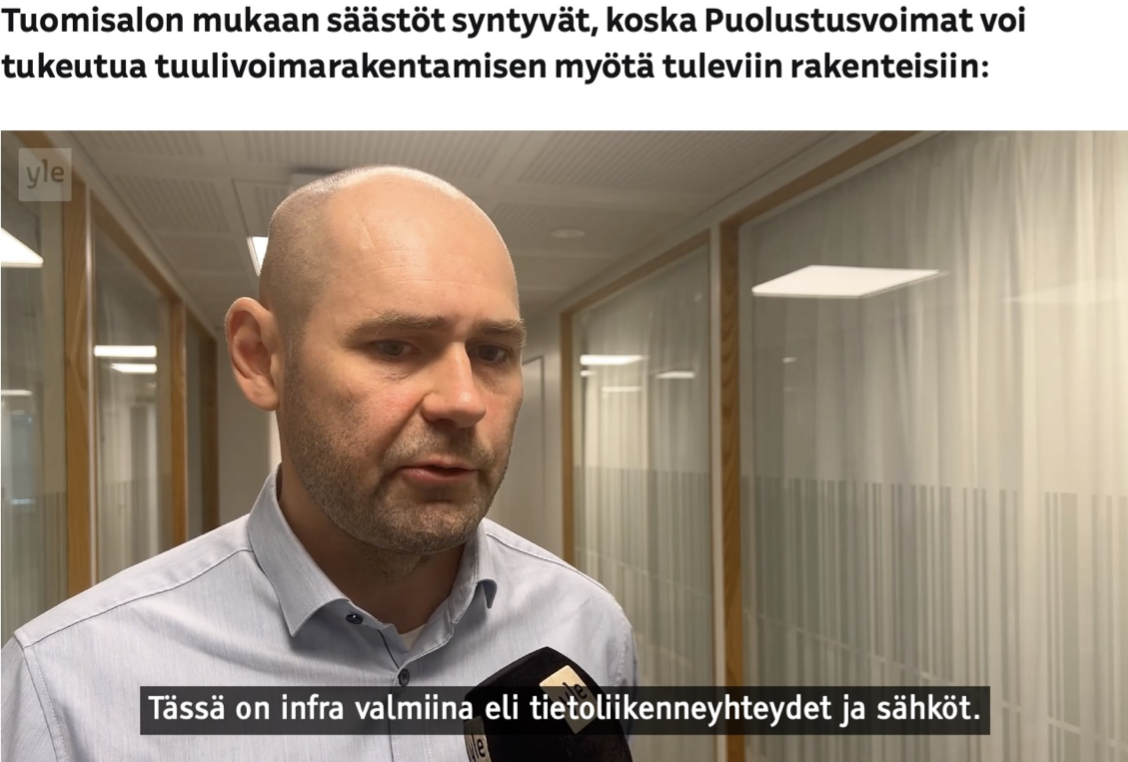
According to LUT University researcher Teemu Tuomisalo , studies conducted at the Muukko wind farm in Lappeenranta did not detect any significant disturbances that would prevent the placement of sensors in wind turbines. The result opens up new opportunities for utilizing commercial wind power infrastructure also in national defense.
Sensors placed in wind turbines could support the detection of low-flying targets, such as drones. Possible devices include radars and passive radars, as well as sensors that utilize sound, heat, and video to observe the surrounding airspace and terrain.
High-altitude sensors could complement current surveillance systems and improve the ability to detect small, low-flying targets. Next, LUT University research plans to test sensors in wind turbines together with equipment manufacturers. The premise of the ResilEast program is that energy investments and the development of national defense are not separate issues.
The research results were presented on 22 September at an event organised by the European Commission's Finnish Representation in Helsinki and were widely reported in the media. Muukko's research is part of the Green Hydrogen and Carbon Dioxide Power for Southeast Finland project, funded by the Regional Council of South Karelia.

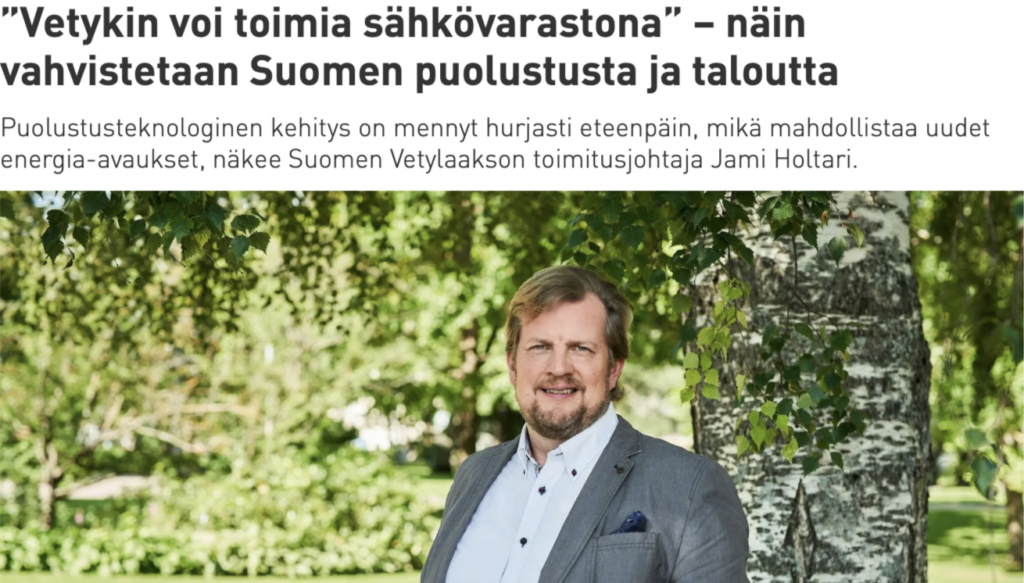
In an interview with Kuntalehti, Jami Holtari, CEO of Suomen Hetylaakso, emphasizes that Finland's competitiveness is built on affordable clean electricity and the development of its production throughout the country. The ResilEast program explores how eastern Finland's energy production and infrastructure can be utilized simultaneously to strengthen economic growth, energy self-sufficiency and national defense.
Jami Holtari in Kuntalehti: All of Finland's energy strengths put to use – ResilEast combines clean energy, security and the hydrogen economy
A more even distribution of wind turbines could balance electricity production across Finland. Developments in defense technology also open up new opportunities for utilizing wind turbines, for example in drone surveillance. Completed electricity, telecommunications, and maintenance connections provide an infrastructure that can also be utilized for defense needs.
Holtari sees significant potential in investments in Eastern Finland. Vibrant regions, local companies and new jobs will strengthen the resilience of the entire country to the crisis.
The key opportunity lies in the hydrogen economy. Cheap renewable electricity can be used to produce hydrogen and refine it into synthetic fuels, methane and methanol, for example, by utilizing bio-based carbon dioxide. This way, the energy can be stored and refined into higher value-added products and exported.
ResilEast's goal is to combine clean energy, industrial investments and security into solutions that strengthen both the vitality of Eastern Finland and the international competitiveness of Finland as a whole.
Source: Municipal Newspaper

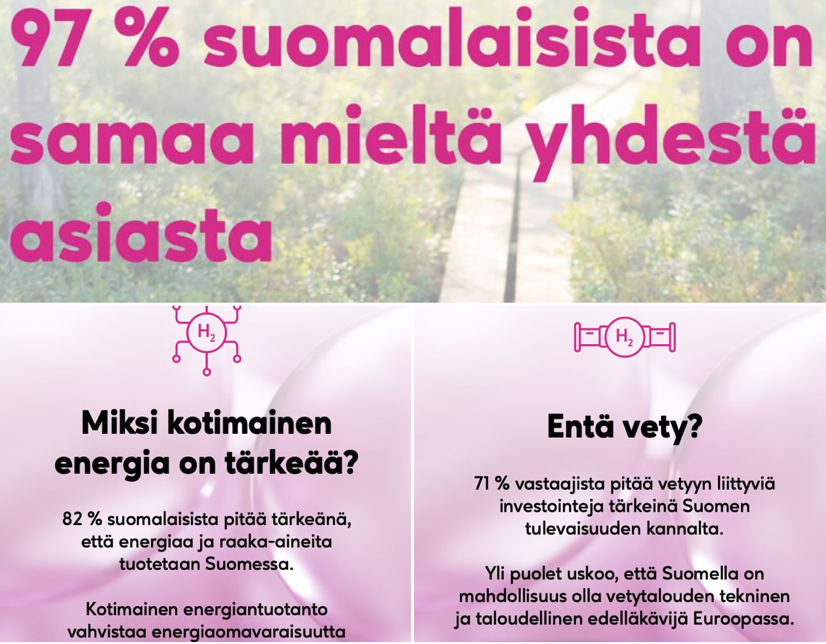
Finns want Finnish energy and hydrogen
Finns consider domestic energy production and related investments important for the future, according to a study commissioned by Gasgrid.
97 percent of respondents to the survey consider it important to invest in domestically produced energy. In addition, 82 percent consider it important to produce energy and raw materials in Finland.
71 percent of respondents consider hydrogen-related investments important for Finland's future. More than half of respondents believe that Finland has the potential to be a technical and economic pioneer in the hydrogen economy in Europe.
Respondents value both domestic energy production, which increases energy self-sufficiency, and green hydrogen, which is used in hydrogen production. Clean energy is seen as a factor in economic growth.
81 percent of respondents are positive about Finland developing and exporting clean energy, such as hydrogen, to Europe as part of economic growth and promoting climate solutions. Green hydrogen is considered important in hydrogen production, which suggests that it is considered an important part of the development of the sector.
"The results can be interpreted as indicating that Finns expect the hydrogen economy to support economic growth and clean transition. The emphasis on green hydrogen in the research results indicates that the acceptability of investments is strongly linked to their climate and environmental impacts," says Heli Virkki, Director of Hydrogen Valley Development at Gasgrid.
The survey was conducted by IROResearch Oy from May 12 to 21, 2026. 1,000 Finns responded to the survey.
Source: Gasgrid
UPCOMING EVENTS

Current affairs webinar on electricity adequacy on October 6th at 2:00 PM-4:00 PM
The webinar will examine the prospects for electricity adequacy, especially in Finland, but also more broadly in Europe. Fingrid will assess electricity adequacy and the flexibility needs of the electricity system over different time frames, as well as what the latest estimates say about future developments. The webinar will conclude with a timely speech on the topic by the Ministry of Employment and the Economy (TEM).
No need to register for the webinar in advance, participation link

Process industry and education cooperation forum in Kouvola 7.10.
The theme of the day is clean transition and energy-intensive industry in Kouvola and how education responds to the clean transition. Jami Holtari, CEO of Suomen Hetylaakso, talks about the possibilities of the hydrogen economy and the situation in eastern Finland.
Time: 7.10.2026
Location: Kouvola House, Simelius Hall, Kouvola
See the full program here
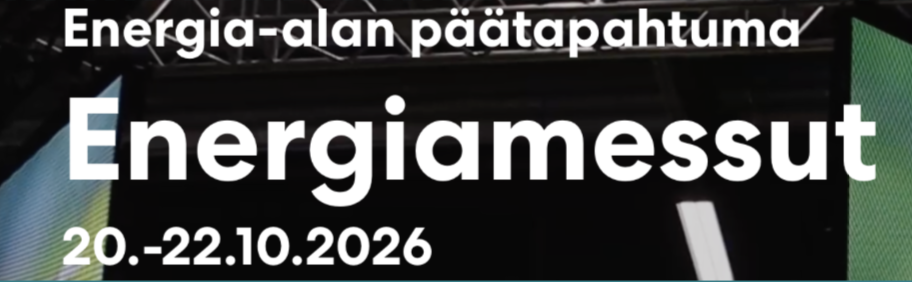
Energy Fair in Tampere 20-22.10.
Energia 2026 will bring together a large and impressive event complex at the Tampere Exhibition and Sports Centre.
In addition to sustainable and smart energy solutions, the event will address climate change and emission control. The event will also address the hydrogen economy and its opportunities. The Hydrogen Cluster, the country's leading players, will be participating, and the fair will feature numerous top seminars and events in the industry.
The fairgrounds feature a diverse offering of the latest energy technologies. The fair's program stages share the latest industry information, perspectives on both the future and current energy situation, and present practical solutions every day. The diverse event package offers a broad overview of the energy industry.
NOTE! Suomen Hetylaakso will be at the fair with Business Imatra and Business Lappeenranta on stand E622 and CEO Jami Holtari will present the national defense energy program ResilEast on Wednesday, October 21st at 3:00 PM-3:20 PM on the Valo stage. Come join us!

Join us for European Hydrogen Week in Brussels 26-30.10
Countries around the world have developed their own national hydrogen economy strategies. Examples include Japan, South Korea, Australia, Germany and the European Union. The aim is to promote the growth and development of the global hydrogen market.
At EU Hydrogen Week, we will discuss the latest national, European and global developments in the hydrogen industry with hydrogen experts working on them. Come and get inspired and learn about the latest trends in the industry!
The European Hydrogen Week brings together influential leaders, policymakers, researchers, consumers and organisations. Participants can meet customers, investors and partners in the exhibition area, engage in thought-provoking discussions and network with actors across the hydrogen value chain.
Read more!
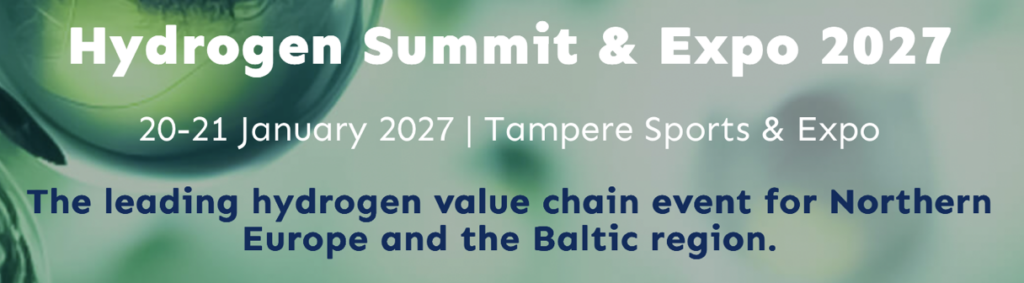
Come join us for the most interesting top event in the hydrogen economy of 2027!
The event brings together industry companies, experts, decision-makers and investors at the Tampere Sports and Exhibition Centre. In addition to Finnish decision-makers, the event attracts a wide range of international speakers and numerous guests and participants from outside Finland.
Hydrogen Summit & Expo brings together over 2,000 hydrogen value chain actors in Tampere. The program features over 80 speakers, and the strong and growing share of international participants is particularly noteworthy. The growth of the event is a testament to the growing interest in the hydrogen economy, both in Finland and more broadly in Europe.
The Finnish Hydrogen Valley will have its own stand at the event, and several of our member companies will also be participating. Come join us!
For more information: Tommi Siikaniva, 0400 885 747, tommi.siikaniva@vetylaakso.fi
Join our growing team today!
We will soon have members to whom we will offer interesting and up-to-date information about the opportunities brought by the hydrogen economy and renewable energy. We are the voice of your organization in the industry and we make sure that the issues that are important to you are brought to the attention of decision-makers. We actively network, constantly meet with influential people in the energy economy and receive the latest information from them about industry developments for your benefit.
We will provide you with regular updates on industry developments, company visits, a newsletter published six times a year, media coverage of topics important to you, visibility on social media channels, and we’ll support your organization’s communications when you want to bring your message to the attention of your stakeholders. Protecting your interests is our job.
Join our growing community here or call Jami at 040 055 1435 or Tommi at 0400 885 747, and we’ll tell you more.
Subscribe to the newsletter and give feedback
Tell us what you want to hear about in our newsletters and give us your feedback. All feedback is very important to us and we do our best to ensure that each newsletter is interesting and informative.
If you have something topical to inform us about, please feel free to send us a message. You should also follow our linkkarme: https://www.linkedin.com/company/suomen-vetylaakso-ry
Newsletter subscription:
- http://eepurl.com/iJCuto
- order by e-mail: tommi.siikaniva@vetylaakso.fi or office@vetylaakso.fi
Green hydrogen and carbon dioxide to power South-East Finland is an ERDF-funded group project in the Renewable and Competent Finland 2021-2027 programme. The main implementer is LUT University, where the Finnish Hydrogen Valley Association is one of the co-implementers.
Copyright (C) *|2026|* *|Suomen Vetylaakso ry|*. All rights reserved. Our office email address is: Office@vetylaakso.fi