Clean electricity, carbon dioxide, and hydrogen form the cornerstones of the energy system of the future. Clean electricity and water can be used to produce hydrogen, which in turn can be converted together with carbon dioxide into basic chemicals for industry and consumers. At the same time, flexible consumption on the electricity demand side can be used to balance out peaks in solar and wind power production.
Southeastern Finland accounts for approximately half of Finland's point sources of biogenic carbon dioxide, measured in tons. The utilization of biogenic carbon dioxide therefore has great regional and national economic potential, the effective exploitation of which requires comprehensive planning and coordination of the production and transfer of renewable electricity, carbon dioxide, and hydrogen.
The South Karelia Regional Council and the Kymenlaakso Regional Council have granted a total of €959,451 from the European Regional Development Fund (ERDF) to a cross-regional group project "Green hydrogen and carbon dioxide power for Southeast Finland," which lays the groundwork for renewable energy production and the implementation of consumption-related projects. The project was launched in September 2024. The main implementer is LUT University, and seven other organizations from two provinces are also involved. Cooperation is carried out with local authorities, educational institutions, and business operators in areas such as land use planning, licensing, and data collection. With a view to disseminating information, the project is developing a map-based application to help visualize the region's potential.
In addition, the project will produce a regional roadmap for carbon dioxide capture and utilization. The available green carbon dioxide resources are so significant that the current limitations of local energy production and the electricity transmission network must be taken into account in the development paths. The roadmap presents a plan for the large-scale utilization and capture of carbon dioxide in the region, the infrastructure requirements of the system, and the regional economic impacts.
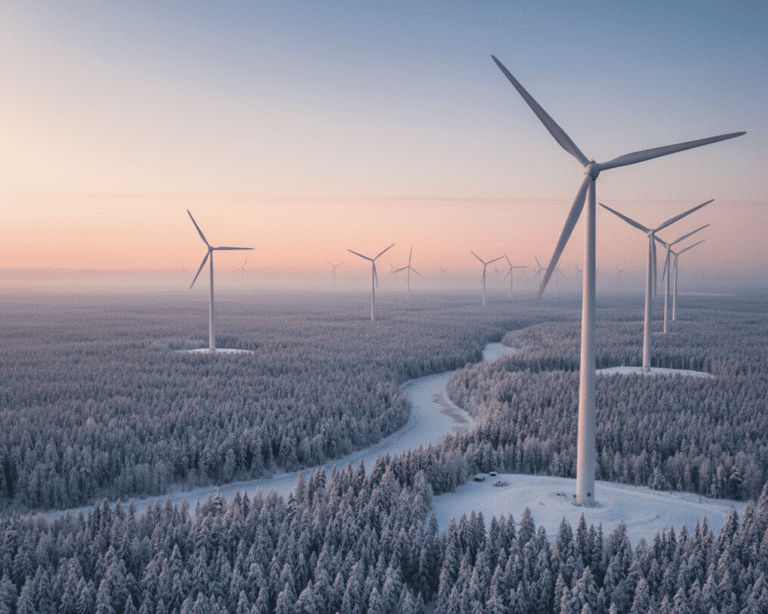
The construction of wind power has faced headwinds throughout eastern Finland due to conflicts between wind farms and air traffic control. To advance the issue, the project is piloting the coordination of wind farms and air traffic control in practical conditions. The project will also examine the potential for solar power generation in the region and the benefits of combined wind and solar power generation for electricity transmission infrastructures.
The project contributes to climate action and regional business development.
Moving away from a fossil-based energy system requires not only a reform of the electricity system but also chemical-based raw materials. In terms of resources, Finland has the potential to be one of Europe's leading countries in the production of fossil-free basic chemicals and fuels. This is a significant opportunity for Finland in terms of its national economy.
The main themes of the project, namely the development of energy transmission infrastructure, biogenic carbon dioxide capture, and renewable energy production, are strongly linked to climate work and the development of regional business. The project will provide practical information and expertise for launching and accelerating investments, as well as support for system design with a view to targeting investments effectively.
The study focuses on infrastructure constraints, among other things.
Project Manager Hannu Karjunen says that the first steps in the project have been to approach several industrial partners and other experts in the field in order to clarify possible forms of cooperation and specific challenges in the field. Discussions have highlighted regulation, product market risk, and infrastructure constraints as particular sources of uncertainty on the technical side. As the project progresses, the focus of the research will be directed toward these identified key challenges.
Hydrogen and related projects are currently attracting enormous interest, and there is even a shortage of skilled labor. As a result, industry often has to train its own experts. Educational institutions could help fill the skills gap, provided that the skills requirements can be correctly identified. The project continues to communicate messages at this interface between different actors.
During the project, tensions between major powers have also affected Finland's eastern border. Companies have been eagerly involved in building a test environment for testing various air surveillance technologies. So far, preparations have been made for measuring background interference as a preliminary step to actual technology testing.
Project participants have their own roles
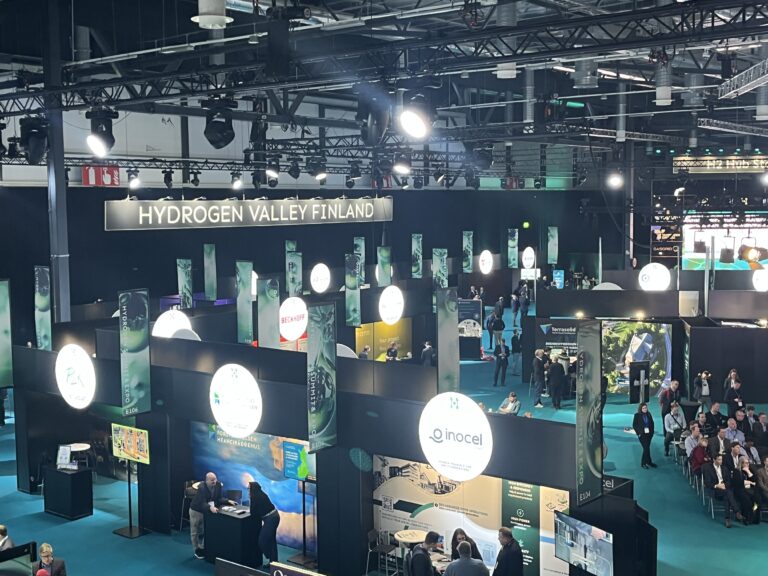
The project is being implemented by a diverse network of experts in southeastern Finland, each contributing their own special expertise. The research expertise of universities and universities of applied sciences is emphasized in the medium- and long-term operational visions and in the areas of education and innovation development. Cities and business development companies, on the other hand, have a strong and up-to-date view of the region's opportunities and play a key role in enabling vitality and investment. The Finnish Hydrogen Valley Association brings visibility and impact to the implementation by acting as the figurehead of a broad network of companies and operators and as a developer of cooperation.
Read more about Finland's contribution to the project: https://suomenvetylaakso.fi/eakr-hanke/
Project in brief:
- Project code: A81246
- Action line: 2 Carbon-neutral Finland
- Implementers: Lappeenranta–Lahti University of Technology (LUT), City of Lappeenranta, Suomen Vetylaakso ry, South-Eastern Finland University of Applied Sciences Ltd, LAB University of Applied Sciences Ltd, Kouvola Innovation Ltd, Cursor Ltd, and Imatran Seudun Kehitysyhtiö Ltd
- Duration: September 1, 2024–February 28, 2027
- Total cost: €1,199,322
- EU and state funding: €959,451 (80%)
Further information: Rakennerahastot.fi