A group of Eastern Finnish influencers unveiled a national defence energy programme with the support of LUT University and Hydrogen Valley Finland
The ResilEast programme brings together Finland's energy supply and national defence in a new way, increasing the country's resilience. The programme aims to ensure that our infrastructure, energy supply and defence support work in times of peace, hybrid power and war. In particular, ResilEast will strengthen employment in eastern Finland and the economy of the country as a whole.
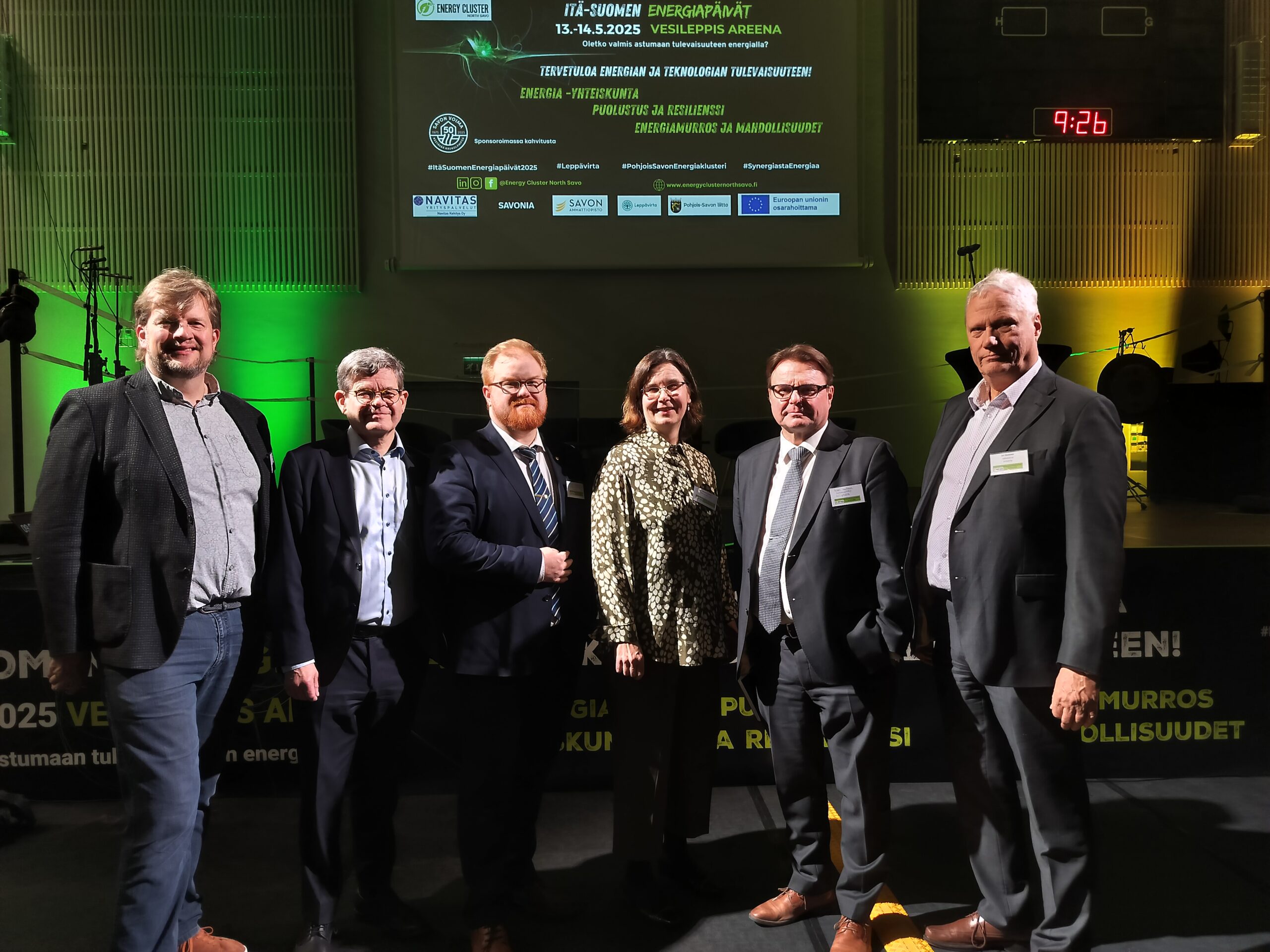
ResilEast supports the EU preparedness strategy for the Union, based on President Niinistö's report. The programme is part of the implementation of the EU Defence White Paper and the Government's Eastern Finland Programme. The ResilEast programme was launched at the Eastern Finland Energy Days in Leppävirta on 13 May.
- ResilEast aims to make energy production and networks, national defence, data, road and rail networks, personal and equipment shelters, crisis medical care and rescue infrastructures both more productive and more resilient to crises. The programme can be extended to cover the entire eastern border of the EU and NATO, as well as the Baltic Sea region," says Jari Sistonen of U-Cont Oy, the father of the programme and the international energy entrepreneur who presented it at the Energy Days.
20 years of work for a medium-sized city
According to Jami Holtari, CEO of the Finnish Hydrogen Valley Association, the ResilEast programme would bring tens of thousands of jobs to eastern Finland if implemented. The construction of wind farms alone would have a dramatic impact on the employment situation in our country. Finland's Hydrogen Valley aims to promote renewable energy and the hydrogen economy in eastern Finland.
A conservative estimate puts the total potential for wind farm construction in Kymenlaakso, South and North Karelia, South and North Savo and Kainuu at 6 186 wind turbines, which would mean a total turbine investment of around EUR 37 billion.
- The economic impact is estimated over the 46-year lifetime of a wind turbine, which means 587,000 jobs, €83 billion in tax revenue, €205 billion in GDP growth and 126 terawatt hours of energy production per year. Wind turbines would provide jobs for the working-age population of a medium-sized city like Kajaani, for example, for more than 20 years, Holtari calculates.
The wind turbines planned along the eastern border from Kymenlaakso to Lapland are just part of the ResilEast programme's vitality impact. There are also other plans for energy supply, infrastructure and shelter, among others.
At the end of February, the municipal employment services had a total of 326 400 jobseekers (12% of the labour force), of whom around 220 000 (67.4%) live in Kymenlaakso, South Karelia, North Karelia, South Savo, North Savo and Kainuu. This figure is 1.2% higher than a year ago.
The wind energy solution exists
Until now, it has been almost impossible to build wind turbines in eastern Finland because they interfere with the Defence Forces' research.
According to Petteri Laaksonen, Research Director at LUT University, the technological solutions to solve the radar problem exist.
- The sensors on the wind turbines do not transmit anything, but detect the environment by receiving radio signals. This makes them very difficult to locate. The sensors support the situational awareness provided by the military radar. There are solutions if you want to use them," explains Laaksonen.
Read more about the ResilEast programme: www.resileast.com
For more information:
Jari Sistonen 040 551 0580 jari.sistonen@u-cont.fi (ResilEast package, defence support)
Petteri Laaksonen; 040 508 8498 petteri.laaksonen@lut.fi (energy, wind power, economic impacts)
Jami Holtari 0400 551 435 jami.holtari@vetylaakso.fi (role of hydrogen, employment and social impacts)
Joonas Hänninen 040 676 5544 joonas-hanninen@varkaus.fi (social impacts, role of municipalities)